Dental Health Report
Dental Health Report
HEALTH › ORAL CARE › GUM DISEASE & SENSITIVITY
Goodbye bleeding gums? Try this "30-second chewing ritual" that helps soothe gums and avoid the $1,600 deep cleaning
.png)
If bleeding gums, tooth sensitivity or bad breath are part of your daily life, read this short article.

Dave Kowalski - Oral Care Expert
Updated on August 22, 2026
If your dentist told you gum recession is "just aging," what they're really saying is: "I don't know how to help you, so accept it."
If you've sat in a dental chair, been told your hygiene is perfect, but your gums are still receding... only to hear "we'll monitor it" or "grafting is your only option"...
Then what I'm about to reveal will explain why they're wrong, and what's REALLY happening to your gums.
I'm Dave Kowalski, oral health researcher.
I've spent years working in the dental and oral health field. And I still got blindsided.
Because after 45, the surprises started coming. $1,580. Then $3,058. Then $5,690. Root planing, grafts, varnishes, sealants. Things I'd never been warned about, for a mouth I'd been taking care of my whole life.
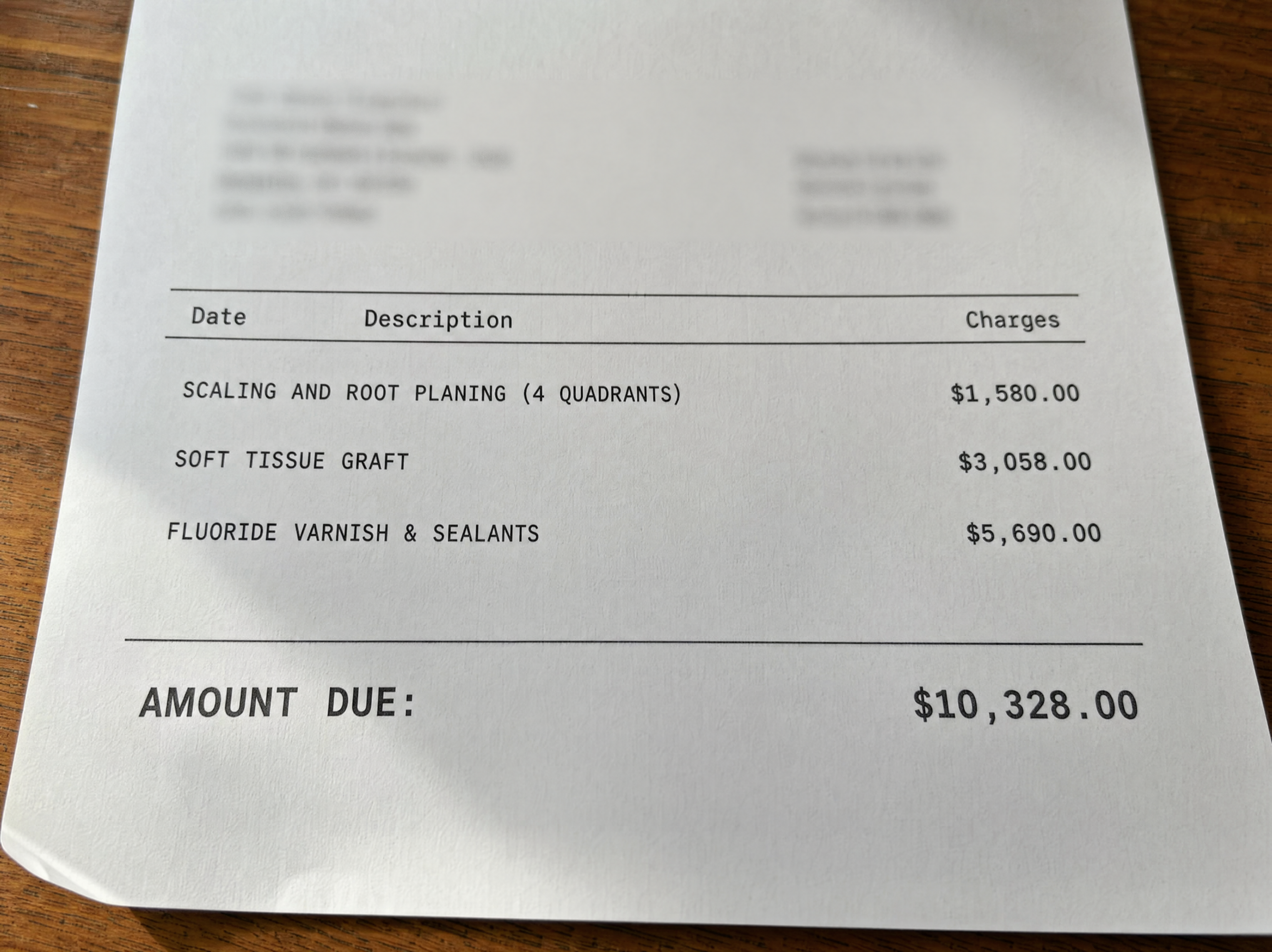
I was paying a mortgage worth of dental fixes on a problem nobody had bothered to explain to me.
And I'm frustrated.
Not at you. At a dental system that monitors recession but never addresses why it's happening in the first place...
So if you're anything like how I was… if your gums bleed when you brush… if cold water makes you flinch before it even hits the tooth… if you have breath you can't shake no matter what you chew… or if a dentist has ever quoted you thousands of dollars for root planing, gum grafts, sealants, or varnishes you never saw coming…
Then you're in the right place. And you're not the one who failed here.
Please read the next 4 minutes carefully.
Because what stopped my dental bills has nothing to do with brushing harder, flossing more, whitening trends, charcoal, oil pulling, or any of the things you've already tried.
It has everything to do with one thing I completely overlooked: how much I could do for my teeth by changing a single daily habit.
The Dental Visit That Completely Broke Me
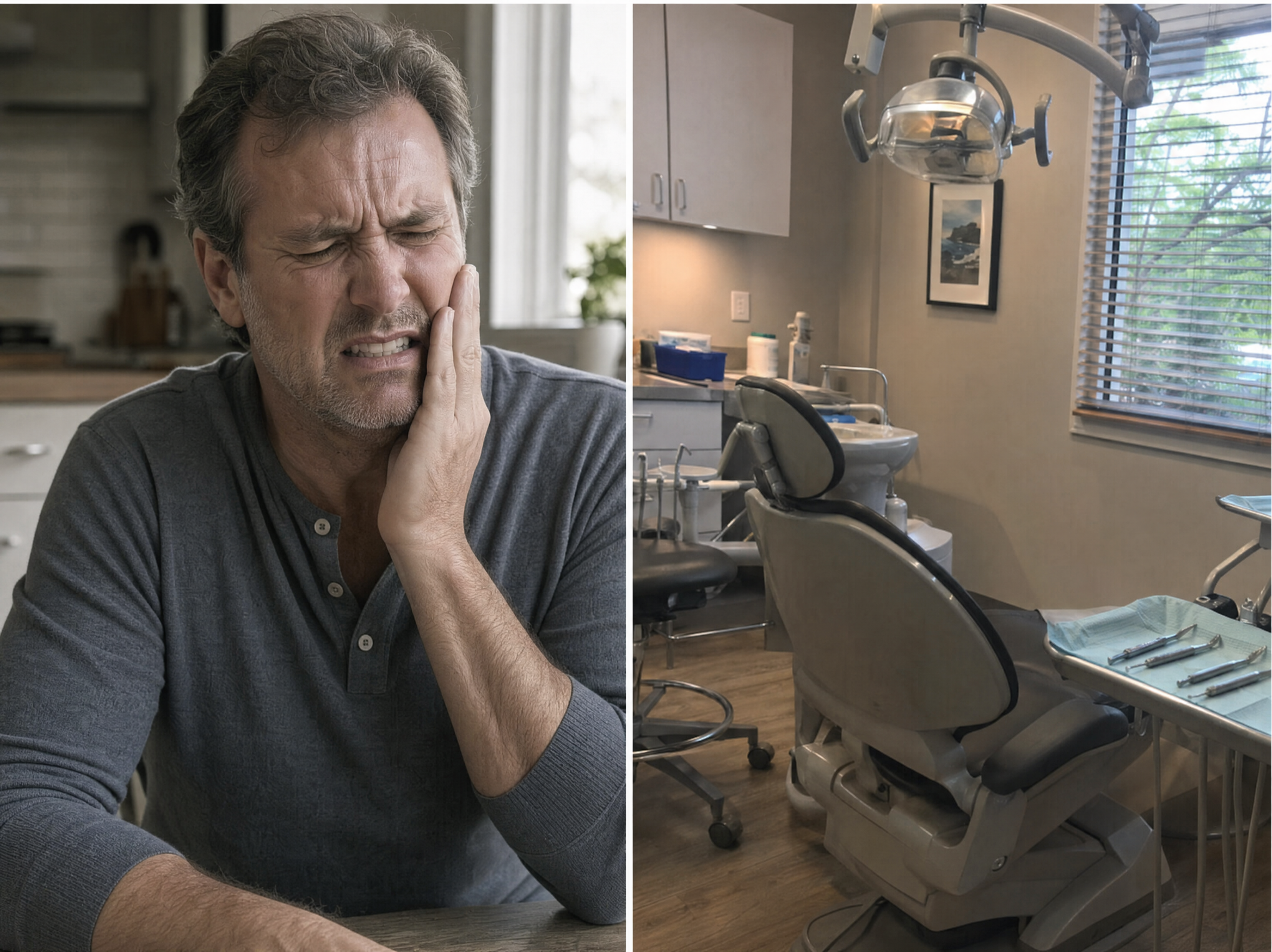
It was a Tuesday afternoon, a routine cleaning.
The hygienist went quiet and called the dentist over. "Pockets." "Bleeding on probing." "Recession at three and four."
I brushed twice a day my whole life. I was proud of my teeth.
"So what do I do?"
"Not much. Gums don't grow back. We'll monitor it."
She was right about that. Gums don't grow back.
But she'd answered a question I never asked. Because when gums pull back, what's left behind isn't enamel. It's root surface. Softer. More porous. The one place in your mouth where bacteria get the easiest grip.
That surface was behind the sensitivity and the bleeding both. And nobody in that room said a word about it.
The REAL Reason Your Gums And Teeth Are More Sensitive More After 40
What if I told you the bleeding and the sensitivity aren't two problems?
They're from one underlying cause.
It sounds strange, but it's true.
Your enamel is 96% mineral. The root hiding under your gumline is closer to 70%.
Enamel is the hardest thing in your body. It's built to sit in an acidic mouth for decades. The root underneath was never built for that, because it was never supposed to be uncovered.
Then your gums pull back, and it is.
And this is what really got me.
Enamel starts dissolving when your mouth hits a pH of 5.5. Root surface starts dissolving around 6.7.
Your saliva sits at 6.7.
So the second that root is exposed, all day long.
Acid your enamel wouldn't even notice is pulling mineral out of that root. And plaque parks on it and holds the acid there, which is what keeps the gums around it red and bleeding.
What changes after 40
Saliva is your body's mineral delivery. It carries calcium and phosphate and washes acid away. It's the reason your teeth made it through your twenties.
You make less of it as you age. A lot less once you start the medications most of us pick up in our forties and fifties. Blood pressure. Antidepressants. Antihistamines. Dry mouth is on hundreds of labels.
So more root is exposed than ever, and less saliva is protecting it.
Most people blame themselves. Didn't floss enough. Brushed too hard.
Think of enamel as a sealed floor and root surface as bare wood. Spill on the sealed floor, you wipe it up. Spill on bare wood, it soaks in.
Why nothing you've tried has worked
That's why sensitive toothpaste, deep cleanings, and oil pulling never worked for me.
Toothpaste numbs the nerve. Cleanings scrape the bacteria off and it comes back.
None of them put anything back on the surface underneath.
Here's The Bad News...
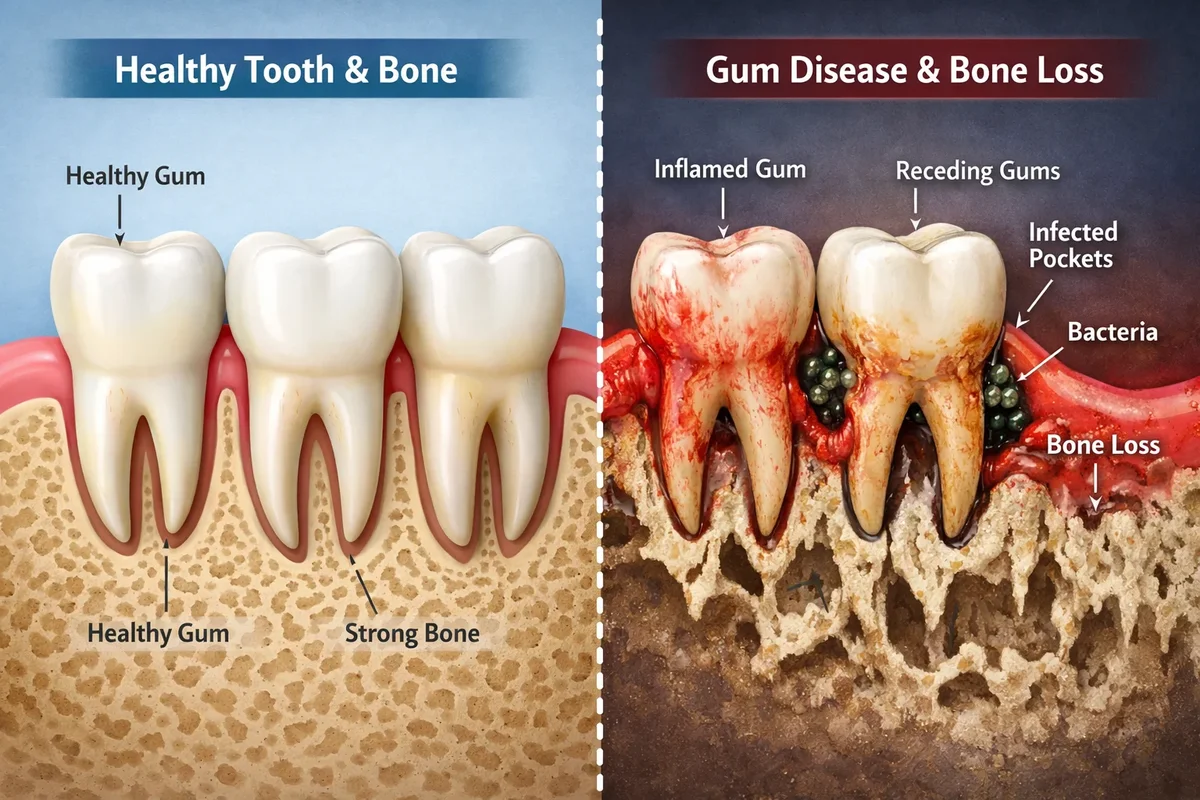
As you age and more root surface gets exposed, mineral keeps leaving it.
That surface dissolves at a pH your mouth already sits at. And every time you eat or drink, it drops lower. Plaque parks on the exposed root and holds the acid there, so instead of a few minutes at a low pH, you get hours.
The sensitivity sharpens. And a root surface steadily losing mineral is where root decay begins, the kind that's hardest and most expensive to fix.
Toothpaste doesn't help here. It numbs the nerve and moves on.
What you actually need works on both sides of the equation.
Mineral going back onto the exposed surface.
And support for a more neutral pH between brushings, so the acid isn't sitting there pulling more out in the meantime.
Support Healthy-Feeling Gums And Teeth (Without The Expensive Or Painful Procedures)
It's all possible thanks to what researchers figured out decades ago: direct mineral contact.
Hydroxyapatite is the mineral your teeth are already made of. Same mineral in your enamel, same mineral in the root surface your gums stopped covering. Put it directly on that surface and it deposits there.
Here's why toothpaste and rinses fall short:
You brush for two minutes, twice a day. That's four minutes of contact out of twenty-four hours. Then you spit, and whatever was working goes down the drain.
Mouthwash is worse. Thirty seconds, then rinsed away.
The rest of the day, that exposed root is on its own.
But when hydroxyapatite sits against the gumline and stays there:
Minutes of contact, not seconds
Lands exactly where the gum pulled back
Nothing spit out, nothing rinsed away
Works between brushings, when nothing else is
It's the difference between rinsing a cut and putting a bandage on it.
Then there's the second half.
Mineral going back on only matters if something isn't pulling it off. That's where xylitol comes in. The bacteria on your exposed root feed on sugar and produce the acid that dissolves mineral. They can't metabolize xylitol at all.
What xylitol does:
Bacteria take it in and get nothing from it
13 of 14 clinical studies found less plaque
Plaque index down 43% to 47% in one month
Less plaque means less acid sitting on the root
One ingredient puts mineral back. The other slows down what's taking it away.
Introducing Larineco™ Remineralizing Gum
Larineco™ Remineralizing Gum is functional chewing gum designed to support healthy-feeling gums and teeth, powered by nano-hydroxyapatite, the mineral your teeth are made of.
It is not a coating or a numbing agent. It is the actual mineral in nano form, small enough to settle into the potholes and hairline cracks on an exposed root surface.
Think of a road full of potholes. You do not paint over them. You fill them back in with the material the road was built from.
Because it is a gum, it works where a toothbrush cannot stay. Toothpaste gets two minutes and goes down the drain. Chewing after coffee, after lunch, or after that afternoon snack means mineral is going back on the surface at exactly the moments acid is coming at it.
Chewing also gets your saliva flowing, which is your body's own mineral delivery. A gumline that is not sitting in acid all afternoon can feel calmer.
Then there is xylitol. The bacteria on that exposed surface cannot feed on it, so there is less plaque holding acid where you do not want it.
The rest of the formula handles the in-between. Erythritol supports a more neutral pH. Mastic and myrrh support fresher breath instead of masking it. Calcium bentonite clay gently lifts surface stains as you chew. The chicle and acacia base means you are chewing tree sap, not synthetic plastic.
One ingredient replenishes mineral, another works against the bacteria, and the rest handles the hours nobody was covering.
This is proactive oral care. It helps replenish what leaves that exposed surface every day, before it turns into a quote you did not budget for.
That just-left-the-dentist feeling at 3 p.m., without the appointment.
HEALTH › ORAL CARE › GUM DISEASE & SENSITIVITY
Goodbye bleeding gums? Try this "30-second chewing ritual" that helps soothe gums and avoid the $1,600 deep cleaning
Dave Kowalski - Oral Care Expert
Updated on August 22, 2026
If bleeding gums, tooth sensitivity or bad breath are part of your daily life, read this short article.
If your dentist told you gum recession is "just aging," what they're really saying is: "I don't know how to help you, so accept it."
If you've sat in a dental chair, been told your hygiene is perfect, but your gums are still receding... only to hear "we'll monitor it" or "grafting is your only option"...
Then what I'm about to reveal will explain why they're wrong, and what's REALLY happening to your gums.
I'm Dave Kowalski, oral health researcher.
I've spent years working in the dental and oral health field. And I still got blindsided.
Because after 45, the surprises started coming. $1,580. Then $3,058. Then $5,690. Root planing, grafts, varnishes, sealants. Things I'd never been warned about, for a mouth I'd been taking care of my whole life.
I was paying a mortgage worth of dental fixes on a problem nobody had bothered to explain to me.
And I'm frustrated.
Not at you. At a dental system that monitors recession but never addresses why it's happening in the first place...
So if you're anything like how I was… if your gums bleed when you brush… if cold water makes you flinch before it even hits the tooth… if you have breath you can't shake no matter what you chew… or if a dentist has ever quoted you thousands of dollars for root planing, gum grafts, sealants, or varnishes you never saw coming…
Then you're in the right place. And you're not the one who failed here.
Please read the next 4 minutes carefully.
Because what stopped my dental bills has nothing to do with brushing harder, flossing more, whitening trends, charcoal, oil pulling, or any of the things you've already tried.
It has everything to do with one thing I completely overlooked: how much I could do for my teeth by changing a single daily habit.
The Dental Visit That Completely Broke Me
It was a Tuesday afternoon, a routine cleaning.
The hygienist went quiet and called the dentist over. "Pockets." "Bleeding on probing." "Recession at three and four."
I brushed twice a day my whole life. I was proud of my teeth.
"So what do I do?"
"Not much. Gums don't grow back. We'll monitor it."
She was right about that. Gums don't grow back.
But she'd answered a question I never asked. Because when gums pull back, what's left behind isn't enamel. It's root surface. Softer. More porous. The one place in your mouth where bacteria get the easiest grip.
That surface was behind the sensitivity and the bleeding both. And nobody in that room said a word about it.
The REAL Reason Your Gums And Teeth Are More Sensitive More After 40
What if I told you the bleeding and the sensitivity aren't two problems?
They're from one underlying cause.
It sounds strange, but it's true.
Your enamel is 96% mineral. The root hiding under your gumline is closer to 70%.
Enamel is the hardest thing in your body. It's built to sit in an acidic mouth for decades. The root underneath was never built for that, because it was never supposed to be uncovered.
Then your gums pull back, and it is.
And this is what really got me.
Enamel starts dissolving when your mouth hits a pH of 5.5. Root surface starts dissolving around 6.7.
Your saliva sits at 6.7.
So the second that root is exposed, all day long.
Acid your enamel wouldn't even notice is pulling mineral out of that root. And plaque parks on it and holds the acid there, which is what keeps the gums around it red and bleeding.
What changes after 40
Saliva is your body's mineral delivery. It carries calcium and phosphate and washes acid away. It's the reason your teeth made it through your twenties.
You make less of it as you age. A lot less once you start the medications most of us pick up in our forties and fifties. Blood pressure. Antidepressants. Antihistamines. Dry mouth is on hundreds of labels.
So more root is exposed than ever, and less saliva is protecting it.
Most people blame themselves. Didn't floss enough. Brushed too hard.
Think of enamel as a sealed floor and root surface as bare wood. Spill on the sealed floor, you wipe it up. Spill on bare wood, it soaks in.
Why nothing you've tried has worked
That's why sensitive toothpaste, deep cleanings, and oil pulling never worked for me.
Toothpaste numbs the nerve. Cleanings scrape the bacteria off and it comes back.
None of them put anything back on the surface underneath.
Here's The Bad News...
As you age and more root surface gets exposed, mineral keeps leaving it.
That surface dissolves at a pH your mouth already sits at. And every time you eat or drink, it drops lower. Plaque parks on the exposed root and holds the acid there, so instead of a few minutes at a low pH, you get hours.
The sensitivity sharpens. And a root surface steadily losing mineral is where root decay begins, the kind that's hardest and most expensive to fix.
Toothpaste doesn't help here. It numbs the nerve and moves on.
What you actually need works on both sides of the equation.
Mineral going back onto the exposed surface.
And support for a more neutral pH between brushings, so the acid isn't sitting there pulling more out in the meantime.
Support Healthy-Feeling Gums And Teeth (Without The Expensive Or Painful Procedures)
It's all possible thanks to what researchers figured out decades ago: direct mineral contact.
Hydroxyapatite is the mineral your teeth are already made of. Same mineral in your enamel, same mineral in the root surface your gums stopped covering. Put it directly on that surface and it deposits there.
Here's why toothpaste and rinses fall short:
You brush for two minutes, twice a day. That's four minutes of contact out of twenty-four hours. Then you spit, and whatever was working goes down the drain.
Mouthwash is worse. Thirty seconds, then rinsed away.
The rest of the day, that exposed root is on its own.
But when hydroxyapatite sits against the gumline and stays there:
Minutes of contact, not seconds
Lands exactly where the gum pulled back
Nothing spit out, nothing rinsed away
Works between brushings, when nothing else is
It's the difference between rinsing a cut and putting a bandage on it.
Then there's the second half.
Mineral going back on only matters if something isn't pulling it off. That's where xylitol comes in. The bacteria on your exposed root feed on sugar and produce the acid that dissolves mineral. They can't metabolize xylitol at all.
What xylitol does:
Bacteria take it in and get nothing from it
13 of 14 clinical studies found less plaque
Plaque index down 43% to 47% in one month
Less plaque means less acid sitting on the root
One ingredient puts mineral back. The other slows down what's taking it away.
Introducing Larineco™ Remineralizing Gum
Larineco™ Remineralizing Gum is functional chewing gum designed to support healthy-feeling gums and teeth, powered by nano-hydroxyapatite, the mineral your teeth are made of.
It is not a coating or a numbing agent. It is the actual mineral in nano form, small enough to settle into the potholes and hairline cracks on an exposed root surface.
Think of a road full of potholes. You do not paint over them. You fill them back in with the material the road was built from.
Because it is a gum, it works where a toothbrush cannot stay. Toothpaste gets two minutes and goes down the drain. Chewing after coffee, after lunch, or after that afternoon snack means mineral is going back on the surface at exactly the moments acid is coming at it.
Chewing also gets your saliva flowing, which is your body's own mineral delivery. A gumline that is not sitting in acid all afternoon can feel calmer.
Then there is xylitol. The bacteria on that exposed surface cannot feed on it, so there is less plaque holding acid where you do not want it.
The rest of the formula handles the in-between. Erythritol supports a more neutral pH. Mastic and myrrh support fresher breath instead of masking it. Calcium bentonite clay gently lifts surface stains as you chew. The chicle and acacia base means you are chewing tree sap, not synthetic plastic.
One ingredient replenishes mineral, another works against the bacteria, and the rest handles the hours nobody was covering.
This is proactive oral care. It helps replenish what leaves that exposed surface every day, before it turns into a quote you did not budget for.
That just-left-the-dentist feeling at 3 p.m., without the appointment.
LIMITED TIME OFFER
Save up to 50% off
Larineco™ Remineralizing Gum - Chewable Oral Care

✓ Helps soothe and support healthy gums
✓ Supports strong enamel
✓ Helps ease everyday sensitivity
✓ Fights bad breath at the source
Offer Status
| Sell Out Risk: High
Try it risk-free for 30 days.
INGREDIENTS
How Does It Work?


Nano-Hydroxyapatite
The same mineral your teeth are made of, helping replenish what everyday acid exposure takes.

Xylitol
A natural sugar-free sweetener that disrupts cavity-causing bacteria and helps cleanse and refresh your mouth.

Chicle
A natural tree sap gum base, so you get a longer, cleaner chew with no synthetic plastics or fillers.

Calcium Bentonite Clay
A mineral-rich clay that helps gently lift surface residue for a brighter-looking smile.

Plant-Based Botanicals
Mastic and myrrh, used in oral care for thousands of years to support a balanced oral environment.

Acacia
A natural plant gum that binds the formula for a smooth, consistent chew.
INGREDIENTS
How Does It Work?
Nano-Hydroxyapatite
The same mineral your teeth are made of, helping replenish what everyday acid exposure takes.
Xylitol
A natural sugar-free sweetener that disrupts cavity-causing bacteria and helps cleanse and refresh your mouth.
Chicle
A natural tree sap gum base, so you get a longer, cleaner chew with no synthetic plastics or fillers.
Calcium Bentonite Clay
A mineral-rich clay that helps gently lift surface residue for a brighter-looking smile.
Plant-Based Botanicals
Mastic and myrrh, used in oral care for thousands of years to support a balanced oral environment.
Acacia
A natural plant gum that binds the formula for a smooth, consistent chew.
Join 300,000+ Who Trust Larineco™
.png)
My gums feel more comfortable
Flossing used to make me wince, and the morning sink was the part that worried me. Everything at my gumline just feels more comfortable now. Hard to describe until it changes.
Gary D., 59
Dessert is back on the menu
I had spent years skipping cold desserts. I chew one after coffee and after meals now. I had a scoop with my granddaughter on Sunday and did not think twice about it.
Karen M., 56
A small change I was glad to share
During my usual cleaning, I was asked what I had changed in my routine. I said it was Larineco™ Remineralizing Gum. She wrote it down.
Sharon T., 63
Join 300,000+ Who Trust Larineco™
My gums feel more comfortable
Flossing used to make me wince, and the morning sink was the part that worried me. Everything at my gumline just feels more comfortable now. Hard to describe until it changes.
Gary D., 59
Dessert is back on the menu
I had spent years skipping cold desserts. I chew one after coffee and after meals now. I had a scoop with my granddaughter on Sunday and did not think twice about it.
Karen M., 56
A small change I was glad to share
During my usual cleaning, I was asked what I had changed in my routine. I said it was Larineco™ Remineralizing Gum. She wrote it down.
Sharon T., 63
What You May Notice Over Your First Two Months
WEEK 1
Breath that holds past lunch
The first thing many people notice is fresher-feeling breath that lasts beyond the morning. It is less about covering something up and more about your mouth feeling fresh for longer. If you keep mints in every jacket pocket, this may be the week you reach for them less.
WEEKS 2 TO 4
Cleaner between brushings, not just after
That just-brushed feeling may start lasting beyond the morning. Chew after coffee, lunch, or an afternoon snack to support a cleaner-feeling mouth through the day.
MONTH 1
A gumline that feels less noticeable
Your gumline may begin to feel more comfortable during daily care. Nothing dramatic, just a mouth that asks for less attention.
MONTH 2
Cold may feel easier to enjoy
With continued daily use, some people may find cold drinks and desserts feel more comfortable. This is gradual support, not an overnight change.
Individual results may vary.
What Dealing With Your Gums and Teeth Can Cost in America
Here is the math behind common gum and exposed-root care. These are broad U.S. estimates, and actual costs vary by provider, location, insurance, and individual needs.
The Monitoring Route
Periodontal maintenance every 3 to 4 months: about $600 to $1,000 per year
Deep cleaning when needed: about $600 to $1,600 for a full mouth
Specialty toothpastes, rinses, and in-office varnishes can add hundreds per year
Estimated cost: roughly $1,000 to $1,500 a year.
The Surgical Route
Gum graft: about $600 to $3,000 per tooth
Multiple teeth: often $3,000 to $6,000 or more
Recovery needs and procedure details depend on the patient and provider
Estimated cost: several thousand dollars when multiple teeth are involved.
The Root Decay Route
Filling: about $150 to $300 per tooth
Crown: about $800 to $2,500 per tooth
Root canal: about $700 to $1,500
Estimated cost: expenses can build tooth by tooth.
To Be Clear About What This Is
Larineco™ Remineralizing Gum does not reverse gum recession, replace needed dental care, or give you a reason to skip the dentist.
It gives your teeth daily mineral support between brushings and helps make proactive oral care easier to keep up with.
Not a treatment. A daily habit that supports your teeth before bigger conversations begin.
Final Verdict: Is It Worth It?

I'd spent years around dental care and still felt caught off guard. I kept up with my routine, but my gumline still felt like something I had to watch.
I tried sensitive toothpaste, softer brushing, harder brushing, and strong mouthwash. None of it gave the exposed areas the steady mineral support I was looking for.
Then I started chewing Larineco™ Remineralizing Gum after coffee, lunch, and my afternoon snack. The part I did not expect was how much better my mouth felt through the whole day.
Right now, there are two paths.
Path 1. Keep the same routine and hope the hours between brushings take care of themselves.
Path 2. Give your teeth daily mineral support when your toothbrush is not around. Chew one after meals and make enamel support part of the day.
I know which path I would pick. I did.
If your gums feel tender, cold foods make you hesitate, or fresh breath does not last, Larineco™ Remineralizing Gum may be worth trying. It comes with a 30-day money-back guarantee.
UPDATE: Larineco™ Remineralizing Gum Are Flying Off the Shelves!
Since this article has been published, the demand for this gum flavor has gone through the roof. Word is spreading and people are raving about these new Larineco™ pouches. Stock up and lock in your discount while it lasts!
Trusted By 350,000+ Customers

LIMITED OFFER
UP TO 50% OFF FOR A LIMITED TIME ONLY
This limited-time offer is in high demand and popular flavors often sell out.
DEAL ENDING IN: 02:07:08
Sell-Out Risk: High
FREE Shipping over $50
Try it today with a 30-day money-back guarantee.
© 2026 Larineco™. All rights reserved.
What You May Notice Over Your First Two Months
WEEK 1
Breath that holds past lunch
The first thing many people notice is fresher-feeling breath that lasts beyond the morning. It is less about covering something up and more about your mouth feeling fresh for longer. If you keep mints in every jacket pocket, this may be the week you reach for them less.
WEEKS 2 TO 4
Cleaner between brushings, not just after
That just-brushed feeling may start lasting beyond the morning. Chew after coffee, lunch, or an afternoon snack to support a cleaner-feeling mouth through the day.
MONTH 1
A gumline that feels less noticeable
Your gumline may begin to feel more comfortable during daily care. Nothing dramatic, just a mouth that asks for less attention.
MONTH 2
Cold may feel easier to enjoy
With continued daily use, some people may find cold drinks and desserts feel more comfortable. This is gradual support, not an overnight change.
Individual results may vary.
What Dealing With Your Gums and Teeth Can Cost in America
Here is the math behind common gum and exposed-root care. These are broad U.S. estimates, and actual costs vary by provider, location, insurance, and individual needs.
The Monitoring Route
Periodontal maintenance every 3 to 4 months: about $600 to $1,000 per year
Deep cleaning when needed: about $600 to $1,600 for a full mouth
Specialty toothpastes, rinses, and in-office varnishes can add hundreds per year
Estimated cost: roughly $1,000 to $1,500 a year.
The Surgical Route
Gum graft: about $600 to $3,000 per tooth
Multiple teeth: often $3,000 to $6,000 or more
Recovery needs and procedure details depend on the patient and provider
Estimated cost: several thousand dollars when multiple teeth are involved.
The Root Decay Route
Filling: about $150 to $300 per tooth
Crown: about $800 to $2,500 per tooth
Root canal: about $700 to $1,500
Estimated cost: expenses can build tooth by tooth.
To Be Clear About What This Is
Larineco™ Remineralizing Gum does not reverse gum recession, replace needed dental care, or give you a reason to skip the dentist.
It gives your teeth daily mineral support between brushings and helps make proactive oral care easier to keep up with.
Not a treatment. A daily habit that supports your teeth before bigger conversations begin.
Final Verdict: Is It Worth It?
I'd spent years around dental care and still felt caught off guard. I kept up with my routine, but my gumline still felt like something I had to watch.
I tried sensitive toothpaste, softer brushing, harder brushing, and strong mouthwash. None of it gave the exposed areas the steady mineral support I was looking for.
Then I started chewing Larineco™ Remineralizing Gum after coffee, lunch, and my afternoon snack. The part I did not expect was how much better my mouth felt through the whole day.
Right now, there are two paths.
Path 1. Keep the same routine and hope the hours between brushings take care of themselves.
Path 2. Give your teeth daily mineral support when your toothbrush is not around. Chew one after meals and make enamel support part of the day.
I know which path I would pick. I did.
If your gums feel tender, cold foods make you hesitate, or fresh breath does not last, Larineco™ Remineralizing Gum may be worth trying. It comes with a 30-day money-back guarantee.
UPDATE: Larineco™ Remineralizing Gum Are Flying Off the Shelves!
Since launch, demand for the pouches flavor has gone through the roof. Word is spreading and people are raving about these new Larineco™ pouches. Stock up and lock in your discount while it lasts!
Trusted By 350,000+ Customers
LIMITED OFFER
UP TO 50% OFF FOR A LIMITED TIME ONLY
This limited-time offer is in high demand and popular flavors often sell out.
DEAL ENDING IN: 02:07:08
Sell-Out Risk: High
FREE Shipping over $50
Try it today with a 30-day money-back guarantee.
© 2026 Larineco™. All rights reserved.